Ford GT Gen II

2016–2022
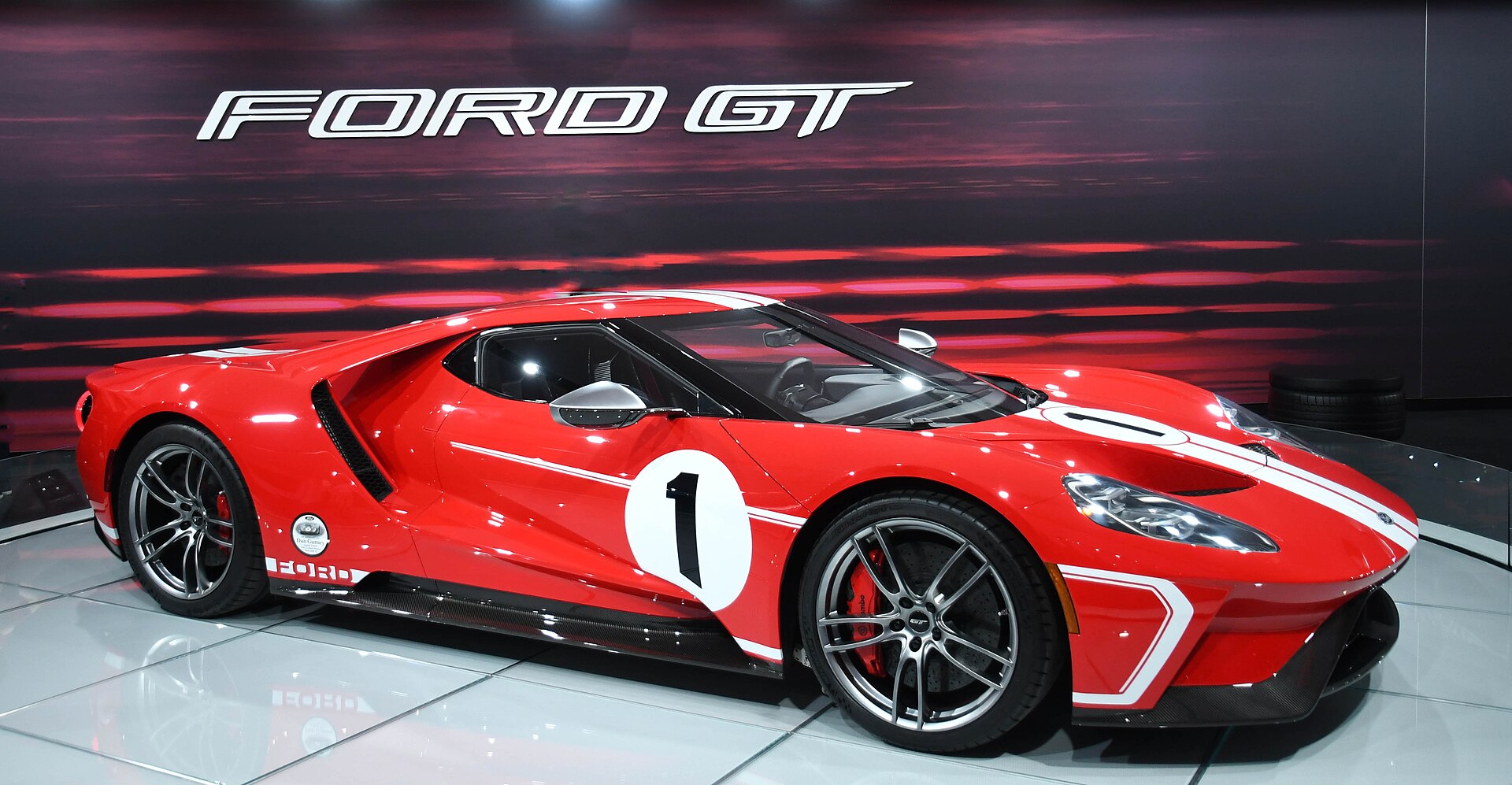
Second-generation Ford GT in ’67 Heritage livery — red, white roundel number 1 — on a black show floor

Ford GT Born from air

Air doesn't go around it. It goes through it. The second-generation GT: 647 horsepower drafted into the shape of the wind, then sent back to Le Mans to settle a fifty-year-old score.

Every surface negotiates with the wind

The buttresses don't block the air; they invite it through. Twin channels run between the canopy and the rear haunches, feeding the wing, while the keeled fuselage splits the flow underneath.

  • Keel fuselage

    The cabin tapers to a teardrop; the mass rides in a narrow keel slung between the wheels.

  • Flying buttresses

    Air passes through the body, not around it: pressure recovered, rear axle pinned.

  • Active wing · Gurney flap

    Rises, tilts and air-brakes on its own judgement. In Track mode it simply stays out.

Ride height 4.7″ → 2.8″ in Track mode
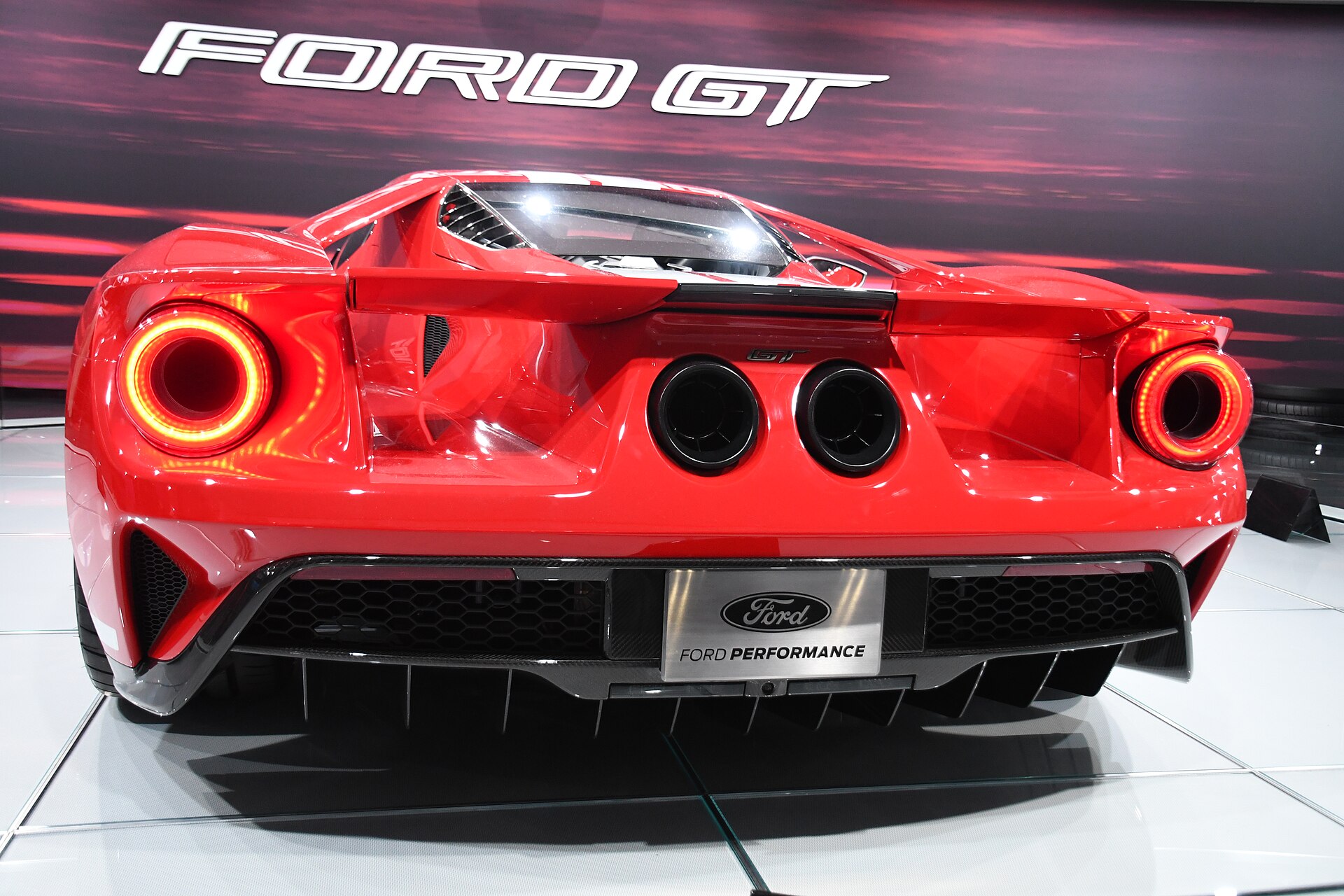
Ford GT seen dead-on from the rear: round tail lamps lit, flying buttresses framing the exposed wing
Rear station — both channels visible
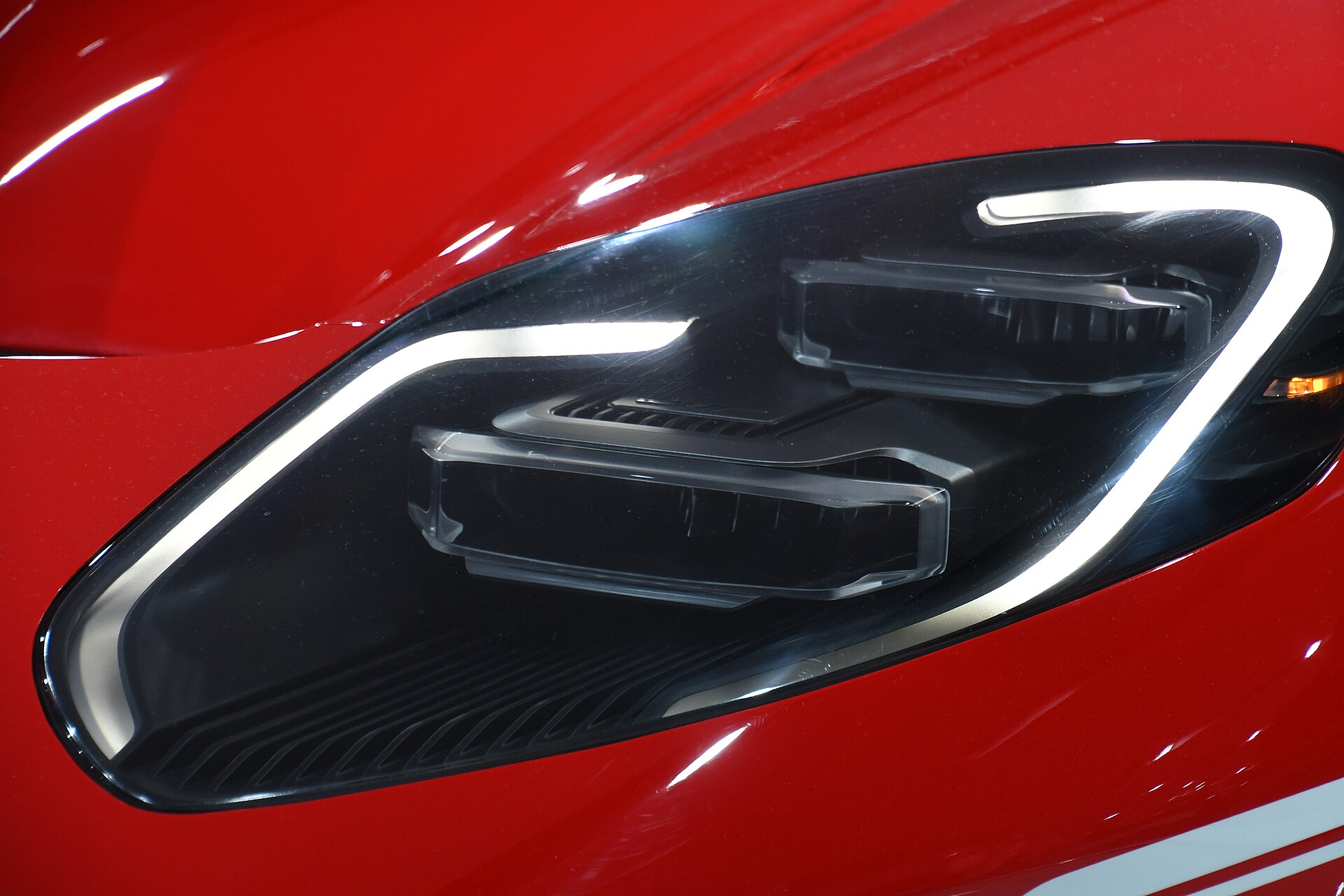
Macro of the GT's headlamp: a lit signature strip wrapped around twin projector bricks
Surface detail · lamp housing

Six cylinders of heresy

They said a supercar needs twelve cylinders. Le Mans disagreed.

hp660 from MY2020

3.5 L twin-turbo EcoBoost V6 · 550 lb-ft @ 5,900 rpm · 7-speed Getrag DCT
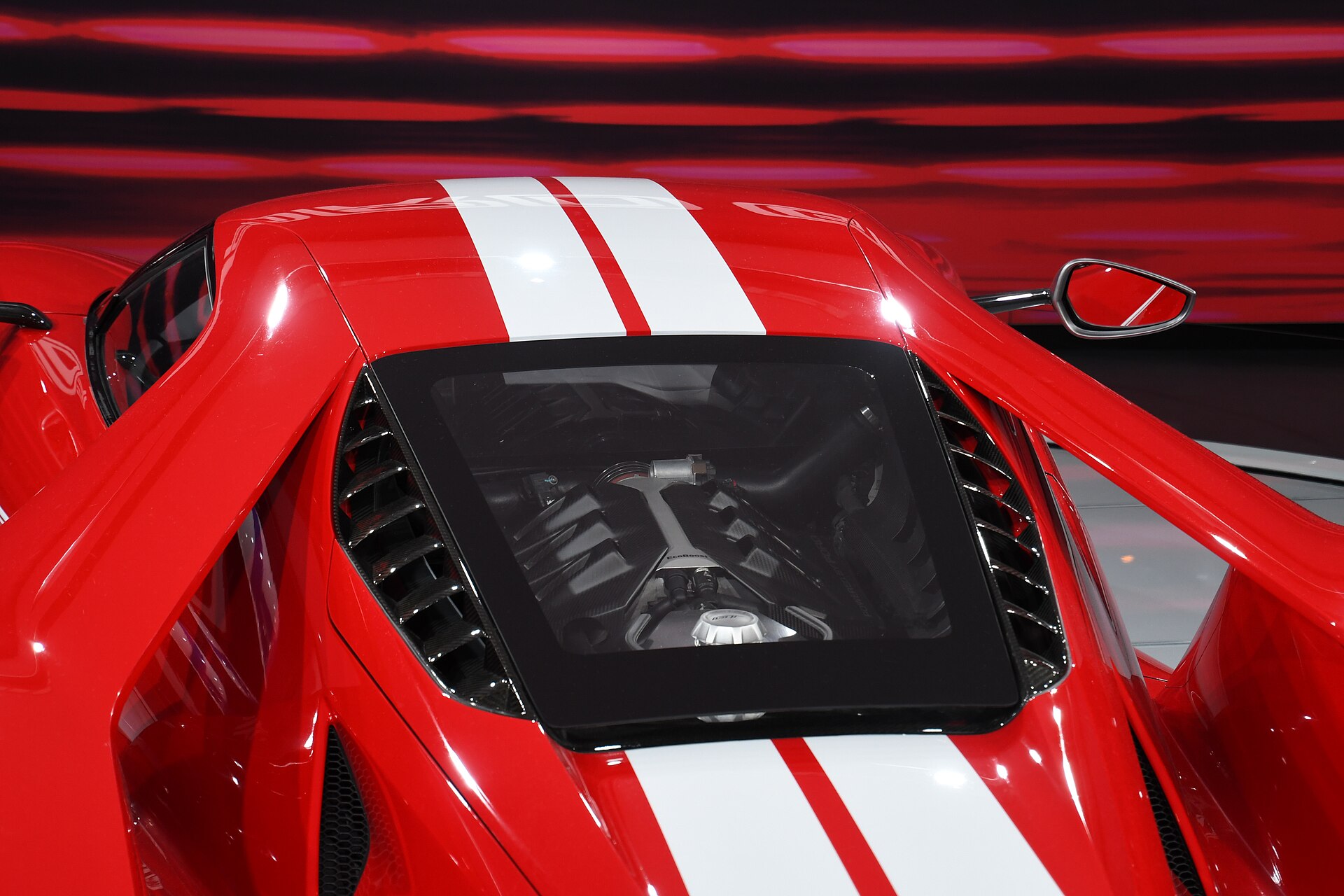
The EcoBoost V6 visible through the GT's rear hatch glass, buttresses sweeping past on both sides
V6 under glass · the buttresses feed it

Velocity — acceleration and top speed

3.0s

0–60 mph

Both turbos lit, all four contact patches loaded.

10.8s

¼ mile · 134 mph trap

The shove doesn't taper. It re-arrives with every gear.

216

mph · Vmax

The fastest production Ford ever built. Wing down, vents shut, one job.

Fifty years between checkered flags

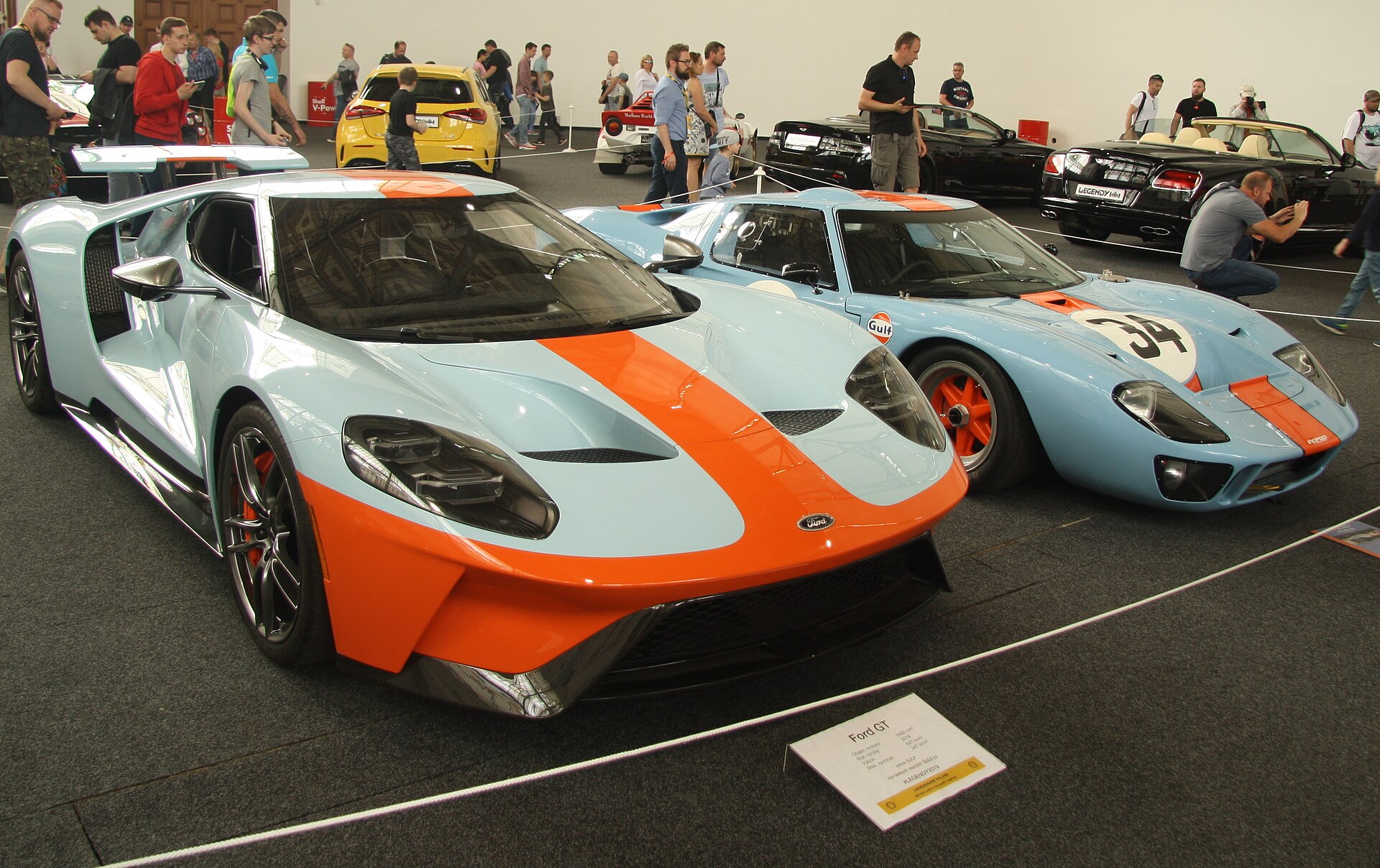
A Gulf-liveried second-generation Ford GT parked beside an original 1968 GT40 — powder blue, marigold stripe, fifty years apart
Gulf blue, twice · GT40 ’68 meets GT ’18

’66

The GT40 sweeps Le Mans 1-2-3. Ferrari never saw it coming. Then it happened again in ’67, ’68 and ’69.

’16

Fifty years later, to the weekend, the GT returns and takes LM GTE Pro: car #68, Hand · Müller · Bourdais.
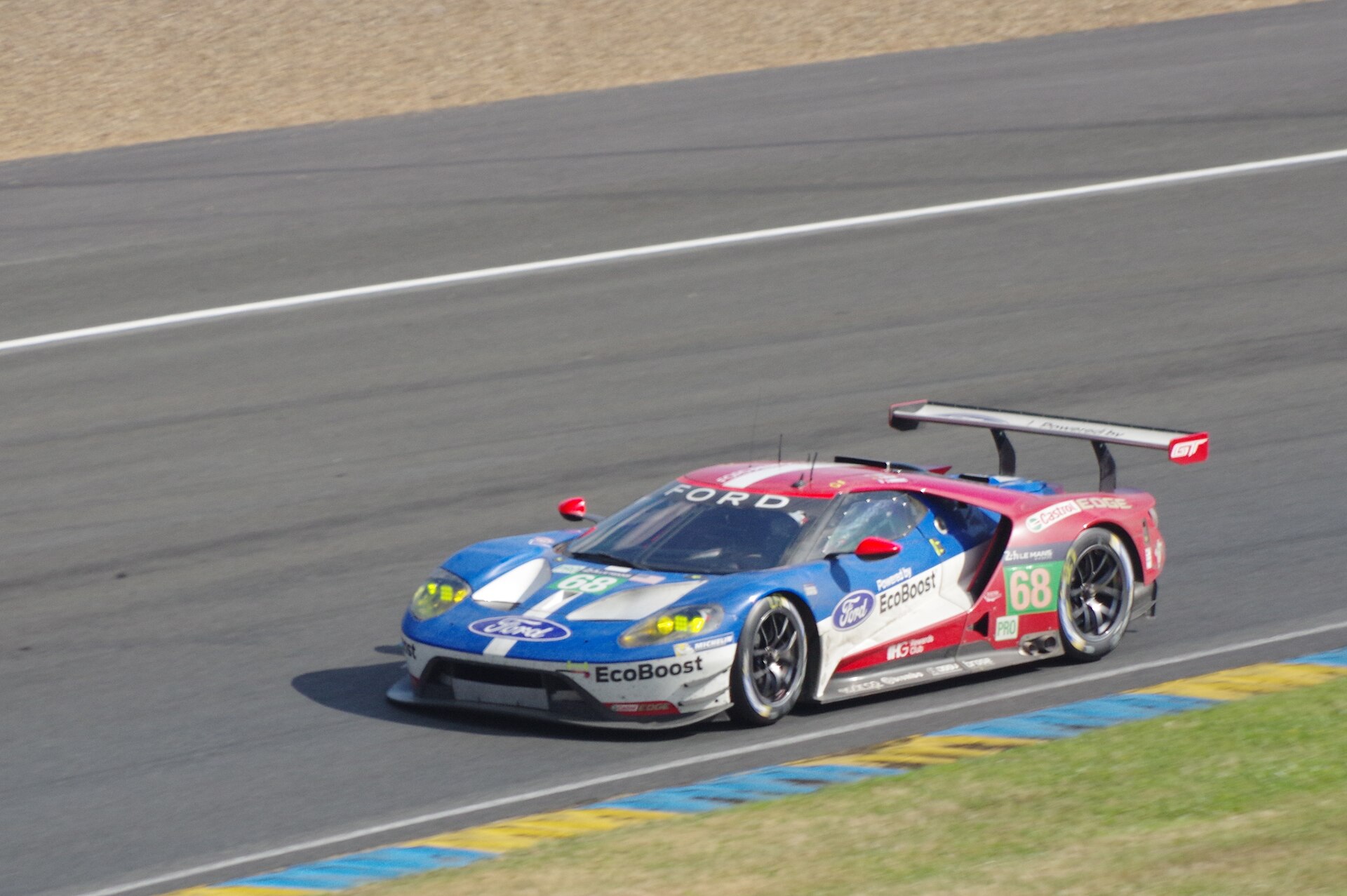
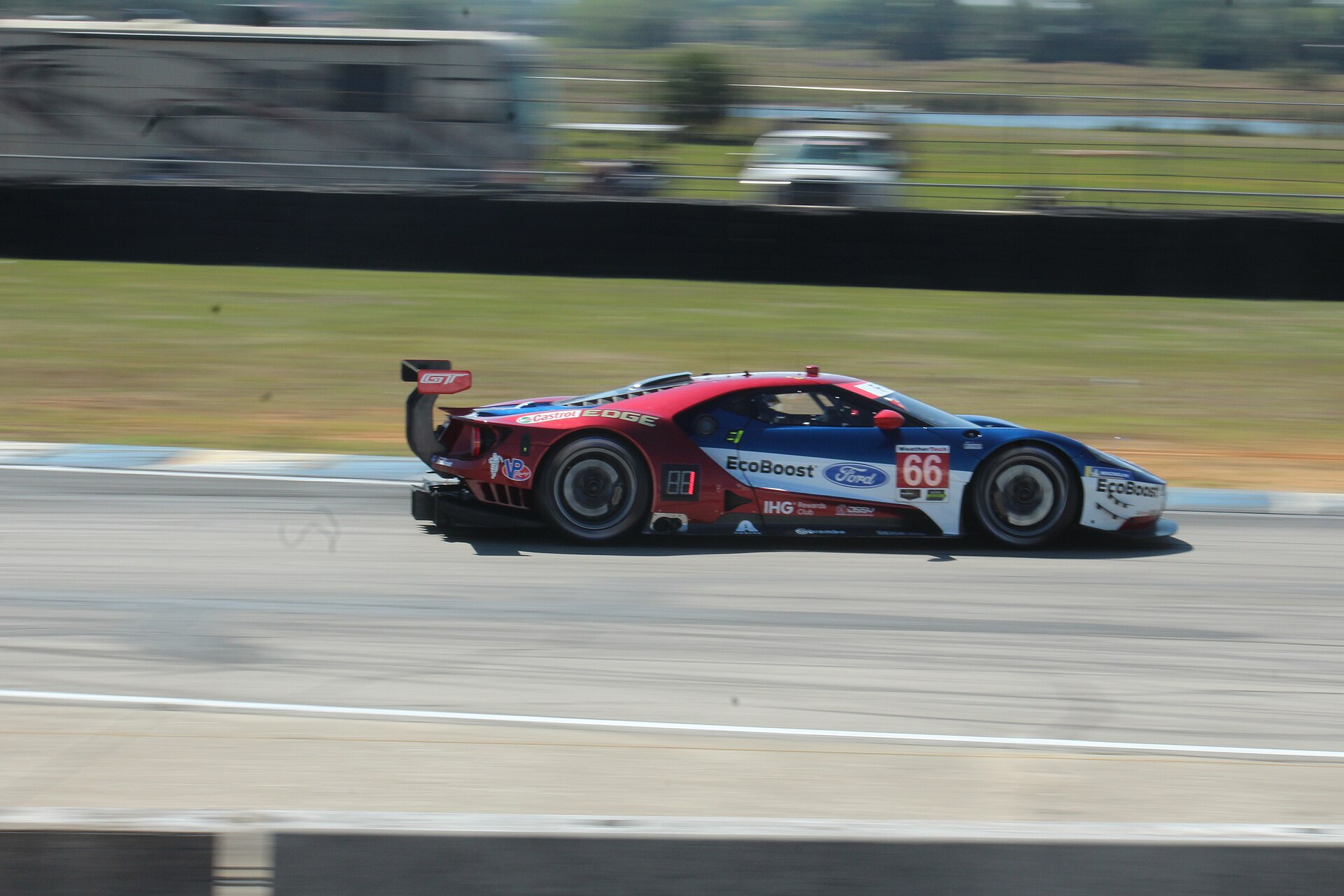
The number 68 Ford GT race car at speed on the Le Mans circuit, red-white-blue works livery
#68 · Circuit de la Sarthe, 2016

Some grudges age well.

The logbook

  • ’66 HeritageBlack + silver, tribute to the first win.
  • Gulf ’68–’69Powder blue, marigold stripe, #9. The livery this whole page answers to.
  • Alan MannRed-and-gold lightweight experiments.
  • Holman MoodyHonouring the ’66 P3 crew.
  • Liquid CarbonNo paint. Just the weave, lacquered.
  • CompetitionBallast out, downforce in.
  • Mk IITrack-only, 700 hp, no rulebook.
  • Mk IVThe last one built. $1.7 M, still sold out.

Fighter jet protocol

The seat is bolted straight to the monocoque. You don't adjust to this car. It adjusts to you: pedals and wheel travel to the driver, and the world arrives through a canopy of Gorilla Glass.

  • Seat Fixed carbon shell; the control column comes to you
  • Canopy Gorilla Glass windshield by Corning
  • Cluster Digital dash re-arms itself with every mode
Drive mode

Ride height 4.7″ · wing stowed · gulf calm

Pit wall

Engine
3.5 L twin-turbo EcoBoost V6
Output
647 hp (660 from MY2020)
Torque
550 lb-ft @ 5,900 rpm
Gearbox
7-speed Getrag DCT
0–60 mph
3.0 s
¼ mile
10.8 s @ 134 mph
Top speed
216 mph · 348 km/h
Kerb weight
3,354 lb · 1,521 kg
Structure
Carbon monocoque, aluminium subframes
Suspension
Pushrod, adjustable hydraulics
Doors
Butterfly
Windshield
Gorilla Glass by Corning
Production
1,350 units · XII 2016 – XII 2022
Assembly
Multimatic · Markham, Ontario
Purchase
By application only